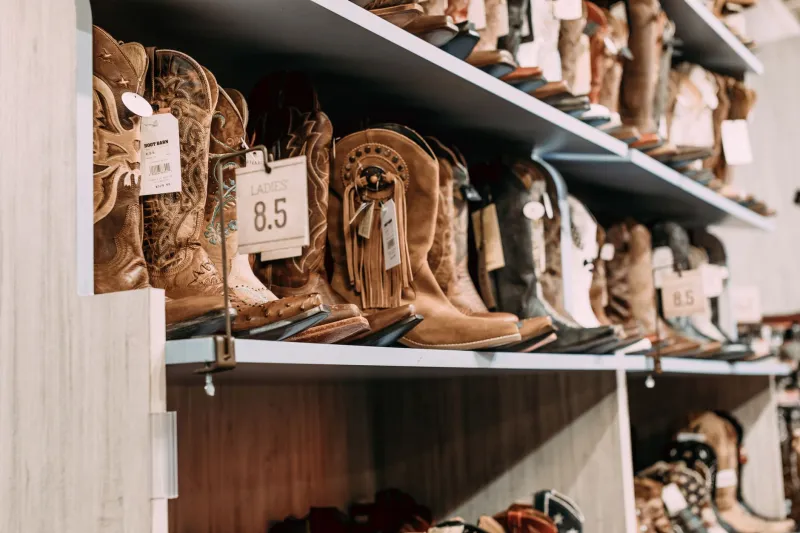
Something Fires in Your Brain When You Pull On a Boot That a Sneaker Will Never Touch
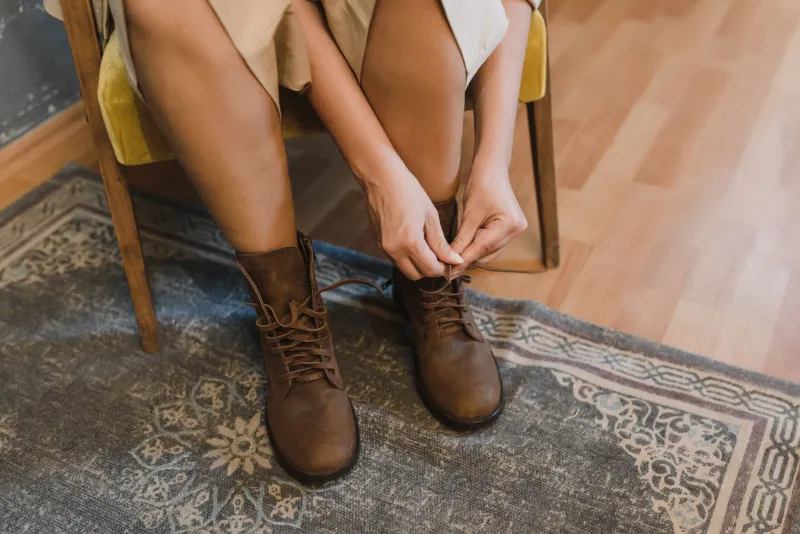
You've probably noticed it yourself. You zip up a tall leather boot, take one step, and something shifts. Not metaphorically — something actually, physically shifts. Your shoulders drop back. Your chin lifts. You walk differently. You feel differently. And the interesting thing is, this isn't a quirk unique to you. Boot enthusiasts across every subculture, every background, every corner of the country report the same thing with almost eerie consistency.
So what's actually happening in there?
Your Brain Doesn't Just Observe What You're Wearing — It Responds to It
The field of embodied cognition has been quietly building a compelling case for years. The basic idea is that your mind doesn't work in isolation from your body — the physical sensations you experience actively shape your thoughts, emotions, and behaviors. Clothing researchers have a specific term for the psychological effects of wearing particular garments: enclothed cognition. The concept was popularized by a 2012 study out of Northwestern University showing that people who wore a lab coat performed measurably better on attention tasks than those who didn't — even when they were told the coat belonged to a painter rather than a scientist.
But boots take this several steps further, and the reasons are genuinely fascinating.
Unlike a blazer or a dress, boots engage the body in ways that are almost impossible to ignore. They're heavy. They restructure the way you plant your foot and distribute your weight. They create sound — that deliberate, rhythmic contact with the floor that announces your presence before you've said a single word. And critically, putting them on is a ritual. You can't just step into a knee-high lace-up boot absentmindedly. The process demands your attention, your time, your physical participation.
The Weight Factor: Why Heavy Footwear Hits Different
There's emerging research on what psychologists call "weight embodiment" — the idea that physical heaviness can translate into psychological feelings of substance, seriousness, and gravity. Studies have found that people holding heavier clipboards rate job candidates as more serious and important. That heavier objects feel more valuable, more worthy of attention.
Boots, particularly structured leather boots with thick soles and hardware, carry genuine weight. And that weight communicates something to your nervous system. It grounds you — literally and neurologically. Proprioceptive feedback (your body's internal sense of where it is in space) gets amplified when there's more mass at the end of your legs. You become more aware of each step. That heightened physical awareness has a centering effect that lighter footwear simply can't replicate.
"There's something about that pressure and weight around the ankle and lower leg that functions almost like a compression garment," says one behavioral psychologist who asked to remain unnamed but has worked with clients who use specific clothing as part of confidence rituals. "It signals containment to the nervous system. That sensation of being held together, supported — it's not trivial."
The Sound of Power
Ask any boot person what they love about their footwear and sound comes up almost immediately. The click of a heel on hardwood. The thud of a lug sole on pavement. The creak of new leather. These aren't incidental details — they're part of the neurological package.
Auditory feedback from our own movements is processed in real time by our brains and used to calibrate our sense of self. Research on gait and sound suggests that people actually adjust how they walk based on the sounds their footwear makes — and that bolder, more resonant footwear sounds correlate with increased stride confidence and reduced hesitation in movement. In plain terms: when you sound powerful, your brain starts to act like you are.
This is partly why heels have maintained such a grip on power dressing despite every practical argument against them. And it's why combat boots, riding boots, and heavy work boots carry a different psychological signature than, say, canvas sneakers. The sound is part of the message — and you're receiving that message with every step you take.
Hormones, Posture, and the Amy Cuddy Effect
You've probably heard about the research on "power poses" — standing in expansive, dominant postures and the effect that has on cortisol and testosterone levels. While some of the original hormonal claims from that research have been contested, the core finding around psychological state and posture has held up: how you carry your body influences how you feel about yourself.
Boots, more than almost any other footwear, mechanically alter your posture. A heeled boot shifts your center of gravity forward and upward, naturally extending the spine. A structured flat boot with a stiff shaft restricts ankle movement in ways that encourage a more deliberate, upright gait. These aren't subtle effects — physical therapists and orthopedic specialists consistently note how dramatically different people carry themselves in different footwear.
When your posture opens up, your breathing changes. When your breathing changes, your nervous system shifts states. The cascade from "I put on my boots" to "my cortisol is lower and I feel like I can handle whatever's in front of me" is not a straight line, but the connections are there and they're real.
The Ritual Effect: Why the Process Matters as Much as the Product
Here's where boots really distinguish themselves from other confidence-boosting fashion choices. The act of putting on a boot — particularly a tall, lace-up, or zip boot — is inherently ritualistic. It takes time. It follows a sequence. It requires you to sit down, focus, and physically engage with the object.
Psychological research on rituals consistently shows that performing structured, repeated actions before a task reduces anxiety and improves performance — even when the ritual itself has no logical connection to the task. Athletes do it. Musicians do it. Surgeons do it. The mechanism appears to involve a shift in perceived control: the ritual signals to your brain that you are preparing, that you are intentional, that what comes next matters.
Boot enthusiasts have been running this experiment on themselves for years without needing a lab to validate it. The morning ritual of pulling on a favorite pair isn't just practical. It's a transition. A declaration. A moment of becoming before the day begins.
Why Boots, Specifically
Other clothes can do some of this. A well-cut suit changes posture. A favorite dress can shift your mood. But the combination of weight, sound, structural support, and ritualistic application is remarkably rare in the fashion world — and boots hit all four simultaneously.
Add to that the cultural encoding boots carry — associations with labor, authority, rebellion, eroticism, adventure, protection — and you've got a garment that arrives loaded with psychological freight before you've even laced the first eyelet.
That's not accident. That's thousands of years of human beings reaching for boots when they needed to feel ready.
The neuroscience is just now finding the words for what your body already figured out the first time you pulled a pair on and felt something click into place.
Some things don't need explaining. But it's nice to know the science agrees.