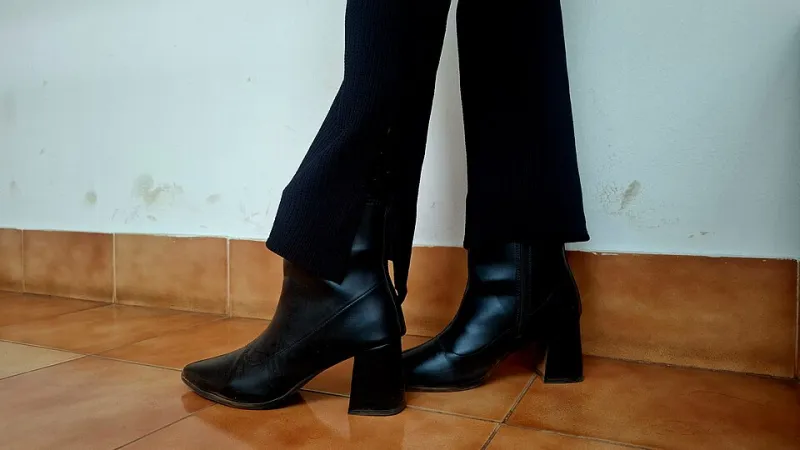
Keep, Cut, or Keep Forever: How to Edit Your Boot Collection Without Editing Yourself

There's a specific kind of dread that comes with staring at forty-plus pairs of boots stacked floor to ceiling and thinking: I don't actually know what I have anymore. You started with intention. Every pair had a reason. But somewhere between the vintage haul from that estate sale in Austin and the impulse purchase you justified as a "birthday treat," the collection stopped feeling like an extension of you and started feeling like a problem you'd been quietly ignoring.
The boot wardrobe audit is one of those things enthusiasts talk about in hushed, slightly embarrassed tones. Because editing a collection isn't just a logistical exercise — it's an emotional excavation. And for people whose desire and identity are genuinely woven into what they wear, the stakes feel higher than a simple closet cleanout.
But here's the thing nobody says out loud: a bloated collection doesn't honor your obsession. It dilutes it.
Why Accumulation Isn't the Same as Appreciation
There's a real psychological phenomenon at work when collections grow past the point of genuine engagement. Psychologists who study material attachment talk about how objects can shift from meaningful anchors of identity to sources of low-grade anxiety when they become unmanageable. You stop experiencing the things you love and start managing them instead.
For boot enthusiasts, this shows up in specific ways: you forget what you own, you stop reaching for pieces you once treasured, and you feel vaguely guilty every time you walk past the closet. The desire that drove the collection in the first place gets buried under the weight of sheer volume.
The audit isn't about minimalism for minimalism's sake. It's about restoring the relationship between you and the objects that actually carry meaning.
Before You Pull a Single Pair Out
Don't start by touching anything. Start by thinking.
Grab a notebook — yes, an actual notebook — and answer these questions honestly before you lay hands on a single boot:
- What does my collection say about me right now, versus who I was when I started building it?
- Which pairs do I think about when I'm not in my closet?
- Is there a piece I own that I've never worn but can't imagine giving up, and why?
This isn't journaling for the sake of it. It's building the lens through which you'll make every decision. Without it, you're just moving things around based on gut reactions that shift by the hour.
The Three-Pile Framework (And Why One of Them Is Non-Negotiable)
When you're ready to physically engage with the collection, work in three categories — not two.
Pile One: The Core. These are the pairs that represent you at your most authentic. They might be worn-in favorites, statement pieces that feel genuinely you, or items that carry emotional weight you can actually articulate. The test isn't "do I love this" — it's "does this belong in the story of who I am."
Pile Two: The Candidates. Anything you feel uncertain about lives here temporarily. Don't force a decision. The candidate pile is where you let things sit while you pay attention to whether you miss them over the next week or two.
Pile Three: The Honest Exits. These are the pieces you kept for the wrong reasons — because they were expensive, because you thought you should want them, because letting go felt like admitting a mistake. Owning up to this pile is the hardest part of the whole process, and also the most freeing.
The non-negotiable rule: nothing moves from Pile Two to the Core without a genuine reason. "I might want it someday" is not a reason. "This represents something specific about my desire" is.
The Emotional Weight Problem
Some boots are hard to release not because of what they are, but because of what they represent. The pair you bought the day you finally felt comfortable enough in your own skin to walk into a specialty shop. The ones you wore to your first community event. The thigh-highs you ordered in secret before you'd ever said any of this out loud to anyone.
Those aren't really about the boots. And that's okay to acknowledge.
You don't have to get rid of pieces with emotional weight just because they no longer serve a practical role in your wardrobe. But you do have to be honest about why you're keeping them. There's a difference between keeping something because it still carries meaning and keeping it because you haven't dealt with what it represents. One deepens your collection. The other clutters it — emotionally as much as physically.
Consider creating a small, intentional "archive" — a separate space for pieces that belong to your history rather than your present. Acknowledging that distinction can make it easier to let go of things that belong in neither category.
What a Curated Collection Actually Feels Like
Here's what people on the other side of a serious audit consistently report: they wear more, more often. They know what they have. They reach for things without second-guessing. The desire that felt diffuse and vaguely dissatisfying sharpens into something focused and real.
A collection of fifteen pairs you're genuinely in relationship with is a more powerful expression of identity than sixty pairs you can barely keep track of. Curation isn't deprivation — it's clarity.
There's also something worth noting about how a tighter collection changes the way you acquire going forward. When you know exactly what you have and why, you become a more intentional buyer. The impulse purchases slow down. The meaningful ones hit harder. You stop filling space and start making choices.
The Part Nobody Wants to Do: Actually Letting Go
Once you've made your decisions, the exit strategy matters. Selling through resale platforms like Poshmark or specialized boot and leather goods communities gives pieces a second life with people who'll actually value them — and it's not a bad way to fund whatever comes next in the collection. Donating to organizations that accept quality footwear is another option that carries its own kind of satisfaction.
What doesn't work: boxing things up and putting them in storage "just in case." That's not letting go. That's renting emotional real estate you're not actually using.
The Collection That Remains
When the audit is done and the closet holds only what genuinely belongs there, something shifts. The boots you kept feel more like yours — not because you own them, but because you chose them again, deliberately, knowing everything else you walked away from.
That's not a diminished identity. That's a sharper one.
The collection that survives an honest audit isn't smaller than who you are. It's exactly the right size.