Old Guard, Closed Doors: How Boot Culture's Gatekeeping Habit Is Pushing People Away

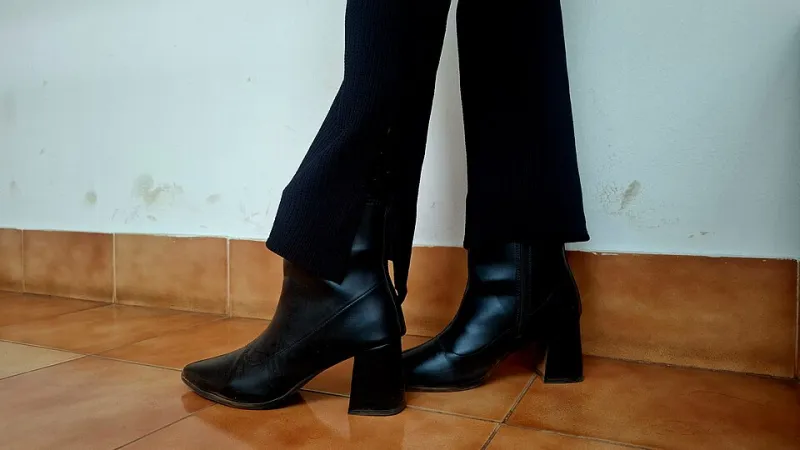
Photo: Evgeny2665, CC0, via Wikimedia Commons
There's a particular kind of silence that happens in online boot communities right after someone posts their first pair. Maybe it's a budget-friendly engineer boot from a mid-tier brand. Maybe the photo isn't perfectly lit. Maybe the caption betrays the fact that they've only been into boots for about six months. And then the comments roll in — not warm welcomes, but interrogations. What's the leather grade? Did you condition them first? Have you tried [obscure boutique brand]? That's not really a serious boot.
Welcome to the gatekeeping problem nobody in boot culture wants to talk about.
The Hierarchy Nobody Voted For
Every subculture develops its own internal hierarchy. That's almost unavoidable. People who've spent years — sometimes decades — building their knowledge, refining their tastes, and investing serious money into a passion naturally feel a sense of ownership over the culture they helped shape. In boot communities, that dynamic is especially pronounced.
The long-timers know their Horween from their corrected grain. They can date a vintage Wesco by the welt stitching. They've worn through three pairs of Whites before most newcomers have even heard of the brand. That knowledge is real, and it deserves respect.
But somewhere along the way, expertise curdled into exclusion. The unspoken rule became: earn your place before you open your mouth. And that rule is quietly suffocating communities that could otherwise be thriving.
What Gatekeeping Actually Looks Like
It doesn't always announce itself. Sometimes it's subtle — a dismissive one-liner under a newcomer's post, a correction that goes three paragraphs longer than necessary, an inside reference dropped without explanation just to remind someone they're on the outside. Other times it's more direct: forum veterans openly mocking beginner questions, moderators enforcing unwritten rules that only make sense if you've been around for years.
In Reddit threads dedicated to boot culture, it's common to see new members asking genuine questions — Is this brand worth the price? How do I break these in? What's the difference between a Goodyear welt and a Blake stitch? — only to get buried under condescending replies or, worse, total silence. The message is clear: figure it out yourself, or go back to buying sneakers.
On Instagram and TikTok, where younger audiences are discovering boot culture for the first time, the dynamic shifts slightly. Comments are more visible, which means public shaming is more efficient. A 22-year-old in Ohio who just bought her first pair of tall riding boots and is genuinely excited about them doesn't need a lecture on authentic equestrian heritage. She needs someone to say, nice boots, here's what I love about that style.
Why People Do It — And Why That Doesn't Make It Okay
Understanding the psychology behind gatekeeping doesn't excuse it, but it does explain it. For many boot enthusiasts, their passion is deeply tied to identity. Boots aren't just something they wear — they're a statement about who they are, what they value, how they move through the world. When someone new shows up with different knowledge, different taste, or a different budget, it can feel like a threat to the culture they've built their sense of self around.
There's also a scarcity mindset at play. Some long-timers genuinely believe that wider mainstream interest will dilute the culture — drive up prices, water down craftsmanship standards, flood the market with cheap imitations. That fear isn't entirely irrational. It's happened in other niche communities.
But here's the thing: exclusion doesn't protect culture. It just makes it smaller and older and eventually irrelevant.
The Real Cost to the Community
When newcomers get shut out, boot culture loses something it can't easily get back. It loses fresh perspectives. It loses the energy that comes with genuine discovery — that electric feeling of someone finding something they didn't know they needed. It loses diversity, both in terms of who's in the room and what gets celebrated.
America's boot culture has historically skewed toward a pretty narrow demographic. The communities that have formed around it — especially online — often reflect that narrowness. Gatekeeping doesn't just maintain that status quo; it actively enforces it. When the barrier to entry is deep existing knowledge, expensive gear, and fluency in community-specific language, the people most likely to be turned away are the ones who were least likely to have had access to those things in the first place.
That's not a coincidence. It's a feature of how gatekeeping operates.
What a Welcoming Culture Actually Looks Like
Some communities are doing this right, and they're worth paying attention to. The boot-focused corners of TikTok, for all their chaos, have produced some genuinely inclusive spaces where creators with 200 followers and creators with 200,000 interact without a rigid pecking order. Local boot meetups in cities like Austin, Nashville, and Portland have developed reputations for being genuinely open — places where a first-timer with a $150 pair stands next to someone who owns custom Luccheses and both are just there to talk about something they love.
The difference isn't about lowering standards. It's about separating knowledge-sharing from status performance. You can be deeply knowledgeable and still be welcoming. You can have strong opinions about craftsmanship without making someone feel stupid for not sharing them yet. You can correct misinformation without treating a beginner like a trespasser.
The most respected voices in any community are rarely the ones who made newcomers feel small. They're the ones who pulled people in, answered questions without condescension, and made the tent bigger without losing what made the culture worth caring about in the first place.
The Invitation That's Long Overdue
Boot culture, at its best, is about something genuinely powerful — the intersection of craft, identity, desire, and self-expression. It's about the weight of real leather, the satisfaction of something built to last, the way a great pair of boots changes how you carry yourself through the world. That's worth sharing.
Every person who discovers that feeling for the first time is a potential advocate, a future collector, a voice that could bring something new to the conversation. Treating them like an intruder doesn't protect the culture. It just makes you the reason someone who could have loved this thing walked away from it instead.
The gatekeepers think they're guarding something precious. In reality, they're just standing in the way.