Five Pairs, Infinite Possibilities: Curating a Boot Wardrobe That Actually Goes the Distance

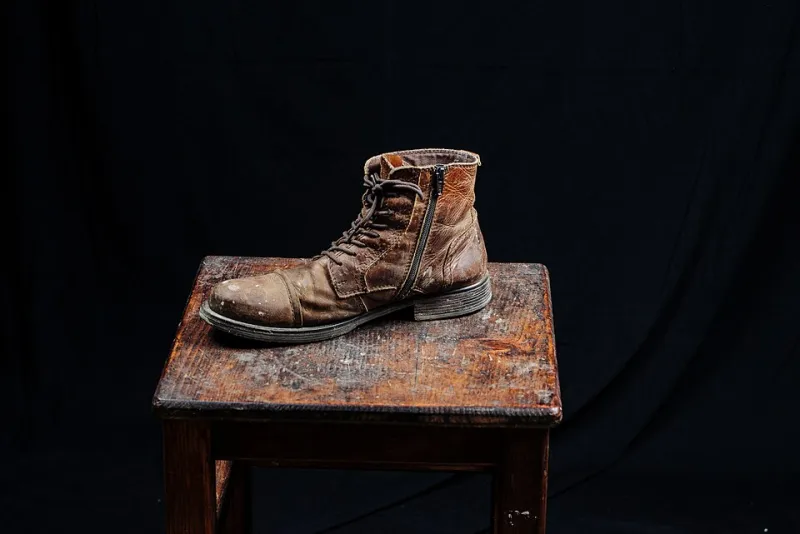
Photo: TracyWeru, CC BY-SA 4.0, via Wikimedia Commons
There's a particular kind of frustration that hits when you've got a closet stuffed with boots and absolutely nothing to wear. Sound familiar? You've got the dramatic thigh-highs you bought on impulse, the distressed combat pair that goes with exactly two outfits, and that stunning stiletto-heeled leather number that's been waiting for an occasion that never quite arrives. The collection looks impressive. The functionality? Not so much.
The capsule boot wardrobe flips that script entirely. Instead of accumulating for the sake of it, you build deliberately — choosing pieces that speak to each other, transition across seasons, and serve both your everyday life and your more adventurous aesthetic moments. And yes, there's absolutely room in this framework for the kind of specialty footwear that makes your pulse quicken. The fantasy and the practical? They're not mutually exclusive.
Start With the Foundation: The Non-Negotiable Pairs
Every solid capsule boot wardrobe rests on a core of two or three genuinely versatile pieces. Think of these as your workhorses — the pairs you reach for instinctively because they play well with almost everything in your rotation.
A mid-calf boot in a neutral leather (black, cognac, or a deep espresso brown) is the undisputed MVP. The silhouette matters here: you want something with a modest heel — somewhere between one and two and a half inches — that reads as polished without screaming effort. In the US market, where the dress code conversation spans everything from a Nashville honky-tonk to a Chicago gallery opening, this kind of boot earns its keep across contexts.
Pair number two should be your ankle boot. This is the most democratic silhouette in the boot world — it bridges casual and elevated, works with denim and midi skirts equally, and translates from fall through early spring without a second thought. If your foundation mid-calf is in black, consider going for a warm tan or a rich oxblood here. The contrast gives your wardrobe more range than doubling up on the same color family.
Building in the Fantasy: Where Specialty Pieces Fit
Here's where Boots & Beyond readers will want to pay close attention, because this is where a capsule wardrobe gets genuinely interesting. The conventional style advice stops at "add a statement boot," but that's underselling what's possible when you understand how specialty silhouettes can slot into a deliberate wardrobe structure.
A thigh-high or over-the-knee boot, when chosen thoughtfully, functions as both a statement piece and a practical wardrobe anchor. The key is fit and finish. A well-constructed knee-high in a matte or semi-gloss leather — the kind with real structure to it, not the floppy fast-fashion version — will work harder for you than you'd expect. Style it with an oversized blazer and straight-leg trousers for something that reads as directional but entirely wearable. Push it further with a fitted bodysuit and you're in different territory entirely. The same boot, two completely different conversations.
For the reader who gravitates toward more specialized aesthetics — heavier hardware, dramatic platform soles, lace-up constructions that climb the leg — the capsule framework still applies. Position these as your intentional "anchor" pieces rather than impulse additions. One extraordinary pair that you build outfits around beats three dramatic pairs that fight each other for attention.
Color Logic: Keeping It Cohesive Without Going Boring
The color palette conversation is where a lot of people go wrong. The instinct is to stay entirely in neutrals for maximum versatility, but that approach trades personality for practicality in a way that doesn't have to happen.
A smarter approach: build your foundation in neutrals (black, brown, tan, navy), then allow yourself one or two pairs in a color that threads through the rest of your wardrobe. Deep burgundy and forest green have both had sustained staying power in the US market — they're distinctive without being trend-dependent, and they read as sophisticated rather than costume-y. A rich burgundy boot that echoes a color already present in your tops, outerwear, or accessories will feel integrated rather than jarring.
Where you can afford to be more adventurous with color is in your specialty pieces. A patent boot in deep plum or a structured lace-up in forest green occupies the same psychological space as a statement accessory — it's meant to be noticed, and the color is part of the point.
Seasonal Transitions: Making Every Pair Work Year-Round
One of the biggest mistakes in boot wardrobe building is thinking seasonally rather than climatically. In most of the continental US, boots have a legitimate run from September through April — that's seven months of real utility. The question is whether your collection is built to take advantage of that.
Lining and construction matter more than most people realize. An unlined leather ankle boot can carry you from a 70-degree October afternoon in Austin to a 40-degree December evening in Denver with the right layering. A shearling-lined pull-on becomes your cold-weather anchor but loses steam once temperatures climb. Understanding what each pair is built for helps you deploy them strategically rather than rotating arbitrarily.
For your specialty or investment pieces, consider how the material performs across temperature ranges. Patent leather, for instance, can stiffen uncomfortably in extreme cold. Suede demands more care in wet conditions. These aren't dealbreakers — they're just information that helps you get more wear out of pieces you've invested real money in.
The Investment Mindset: Buying Once, Wearing Forever
A capsule wardrobe only delivers on its promise if the pieces are built to last. This is where the economics of boot buying get real. A $400 pair of well-constructed leather boots that resoled once and worn for a decade is a dramatically better investment than four $100 pairs that fall apart inside two seasons.
In the specialty and fetish footwear space, this calculus is even more pronounced. Custom-constructed or small-batch pieces from independent makers carry higher upfront costs but often feature construction standards that mass-market alternatives simply can't match — hand-stitched soles, full-grain leather, hardware that won't corrode or loosen with wear. When you're building a capsule wardrobe, these are exactly the kinds of pieces worth saving for.
The goal, ultimately, is a collection where every single pair earns its place — where you reach for each one regularly, where they work together rather than competing, and where the most exciting pairs in your rotation aren't just beautiful objects but genuinely wearable expressions of who you are. That's not a compromise. That's just smart.