From the Runway to the Underground: Luxury Fashion's Very Intentional Flirtation With Boot Fetish Culture
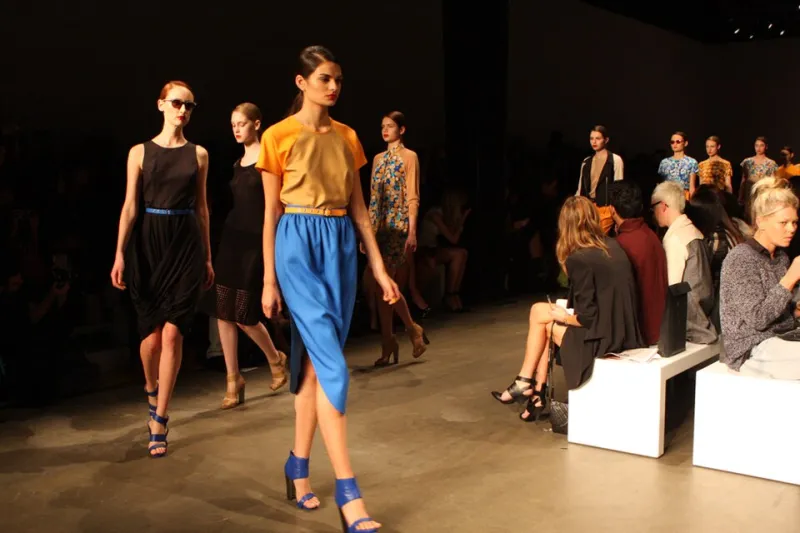
Photo: Eva Rinaldi, CC BY-SA 2.0, via Wikimedia Commons
For a long time, the relationship between high fashion and adult fetish aesthetics operated like an open secret at an industry dinner party — everyone aware of it, nobody quite willing to say it out loud. Designers drew obvious inspiration from BDSM and kink-adjacent visual culture, styled it in editorial spreads that winked at the knowing viewer, and then described the work in press releases using words like "edgy" and "provocative" while keeping a careful distance from the actual subcultures they were mining.
That era is ending. And honestly? Good riddance.
The Shift That's Been Building
The 2024 fashion landscape looks meaningfully different from even five years ago when it comes to boot design and the cultural conversations surrounding it. Luxury houses that once kept their niche-adjacent inspirations coded and deniable are now leaning in — collaborating with underground designers, casting talent from fetish-adjacent communities, and building campaigns that speak directly to audiences who have spent decades being simultaneously courted and kept at arm's length by the mainstream industry.
The numbers back this up. According to market research from several major fashion analytics firms, the "statement boot" category — encompassing extreme heel heights, thigh-high silhouettes, heavy hardware detailing, and unconventional materials — has seen consistent double-digit growth in the luxury segment since 2021. The customer driving that growth isn't a mystery. She — and he, and they — knows exactly what they're buying and why.
"The consumer in this space is extraordinarily sophisticated," says fashion editor Diane Morales, who covers luxury accessories for a major New York-based publication. "They have deep knowledge, strong opinions, and real loyalty to brands that speak to them authentically. Designers who figure that out stop treating it like a liability and start treating it like an asset."
What's Actually Hitting the Runway
Let's get specific, because the devil — and the delight — is in the details.
Several major European houses debuted boot collections in their Fall/Winter 2024 presentations that would have been unambiguously coded as fetish-wear in any other context. Thigh-high silhouettes in wet-look vinyl. Extreme platform constructions that reference classic fetish heel architecture. Lace-up shaft detailing that borrows directly from corsetry traditions. Heavy D-ring hardware on otherwise minimalist designs — a detail that means something specific to anyone who knows it means something specific.
The styling in these presentations reinforced the direction. These weren't boots paired with demure midi skirts to soften the message. They were styled with intention, in ways that acknowledged rather than deflected the aesthetic conversation the footwear was starting.
At the street style level — which often predicts where the industry is genuinely headed better than any press release — the convergence is even more visible. The gap between what you'd see at a high-end boutique opening in SoHo and what you'd see at a leather community event in Chicago or Los Angeles has narrowed dramatically. That's not an accident.
Designer Collaborations and the Underground Connection
Perhaps the most telling development has been the wave of collaborations between legacy luxury brands and designers who emerged directly from underground and alternative fashion communities.
Several of these partnerships have been deliberately publicized in ways that acknowledge, rather than obscure, the subculture connections involved. Designers known for their work within leather and fetish-adjacent communities have been brought in not to "mainstream" their aesthetic but to amplify it — to bring their expertise and their community's visual language into conversation with luxury craftsmanship and distribution.
Toronto-based designer and longtime underground fashion figure Alex Reyes, who recently completed a capsule collaboration with a major European accessories house, describes the dynamic with refreshing directness: "They didn't want me to make something safe. They wanted me to make something real — something that people in my community would actually recognize as authentic. That was the whole point. They understand that authenticity is the rarest luxury."
This is a genuinely interesting moment. The traditional dynamic — mainstream industry extracts aesthetic inspiration from marginalized subcultures, files off the serial numbers, profits — is being complicated by collaborations that involve actual practitioners, actual credit, and actual community engagement.
The Marketing Language Is Changing Too
Beyond the product itself, the way luxury brands are talking about their boot offerings has undergone a notable evolution. Words and phrases that would have been unthinkable in luxury fashion copy even a decade ago are appearing in campaigns and editorial content with increasing frequency.
"Desire," "dominance," "power exchange," "control" — these aren't accidental word choices. Marketing teams at major houses are staffed with people who understand exactly what these terms communicate and to whom. The campaigns are being built to speak to communities that have always been there, purchasing, influencing, and driving culture, while being largely invisible in the official brand narrative.
Morales notes that the shift in language reflects a broader industry reckoning with authenticity. "Consumers — especially in the luxury segment — have extraordinary sensitivity to when they're being pandered to versus genuinely seen. The brands that are getting this right are the ones that actually did the work to understand the community, not just the aesthetic."
What This Means for the Community
For those of us who have always existed at the intersection of genuine boot devotion and adult lifestyle culture — the audience that Boots & Beyond has always been built for — this mainstream convergence is a mixed experience, worth examining honestly.
On one hand, visibility matters. Seeing the aesthetics and desires that have defined a community for decades reflected back through the lens of major fashion institutions carries real cultural weight. It's a form of recognition.
On the other hand, the underground has always had something the mainstream can't manufacture: actual stakes, actual community, actual meaning. The most compelling thing about niche boot culture — the reason it generates the devotion it does — is precisely that it developed outside of commercial validation. It didn't need a luxury brand's blessing to matter.
The most interesting future for this cultural moment isn't one where the underground gets absorbed by the mainstream, but one where the conversation becomes genuinely bidirectional. Where luxury fashion learns as much as it borrows. Where the community's expertise, history, and aesthetic intelligence get the same respect as the craftsmanship happening in Italian ateliers.
Based on what we're seeing in 2024, that future might actually be arriving. And we'll be watching — and writing about it — every step of the way.