Hunt, Score, Authenticate: Inside the Wild World of Vintage and Rare Boot Collecting
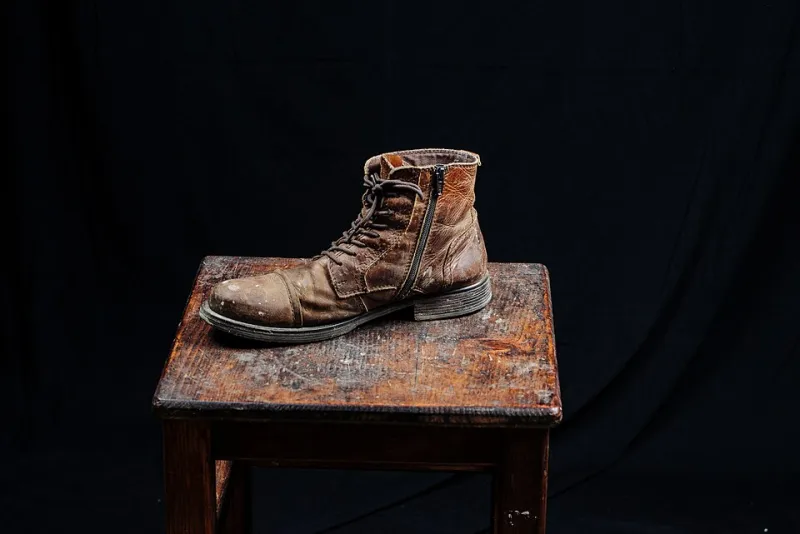
Photo: Shixart1985, CC BY 2.0, via Wikimedia Commons
Somewhere in a climate-controlled storage unit in Austin, Texas, there are 47 pairs of boots. They're organized by era, wrapped in acid-free tissue, and insured. Their owner, a 52-year-old retired logistics manager who goes by "BuckleKing" in online collector circles, started acquiring them in the mid-1990s when he stumbled across a pair of vintage Frye Harness 12Rs at an estate sale for eleven dollars.
"I had no idea what I had," he says. "I just knew they were different from anything I'd seen. Solid. Old. Made like they were meant to last a hundred years." He did some research, found out the pair dated to the early 1970s, and sold them for $340 to a collector in New England. Then he bought six more pairs with the money.
That cycle — find, research, authenticate, sell or keep — is the engine of a resale economy around collectible boots that has grown substantially in the past decade, accelerated by niche online platforms, specialized communities, and a broader cultural moment in which vintage and limited-edition fashion carries serious cachet.
A Market That Flew Under the Radar
The mainstream resale fashion conversation has been dominated by sneaker culture for years — StockX, GOAT, and similar platforms turned limited-edition athletic shoes into tradeable assets with documented price histories. But boots, particularly fetish-adjacent styles, vintage Western wear, and rare designer collaborations, have built their own parallel economy that operates with far less visibility and, frankly, a lot more personality.
Platforms like Depop, Vestiaire Collective, and even niche Discord servers and Reddit communities like r/VintageBoots have become primary marketplaces for serious collectors. eBay remains a significant player — particularly for vintage Western and work boots — but enthusiasts report that the most interesting deals and the most knowledgeable buyers tend to cluster in community-driven spaces where reputation matters.
"The big platforms are fine for casual sellers," explains Dani, a reseller based in Denver who specializes in 1980s and 90s leather boots with what she describes as "strong energy." "But if you really know boots — construction methods, hardware sourcing, regional makers — you want to be somewhere people understand what you're selling. The community platforms are where the real collectors live."
What Makes a Boot Collectible
Not every old boot is worth hunting. The collector market rewards a specific set of qualities that overlap interestingly with what fetish and fashion communities have always prized: exceptional construction, distinctive hardware, unusual silhouettes, and provenance.
Vintage Dehner patrol boots — made by the Kansas-based company that's been producing equestrian and law enforcement footwear since 1897 — command consistent prices in the $400-$900 range for pre-1980s examples in good condition. Early Wesco Boss boots, made in Scio, Oregon, have become grail items for both motorcycle culture enthusiasts and boot fetishists who appreciate their aggressive, utilitarian aesthetic. Certain Frye styles from the 1960s and 70s, before the brand's ownership changes, are sought after for their vegetable-tanned leather and hand-stitched construction.
On the higher end, rare designer boots — think Vivienne Westwood platform styles from the early 90s, or limited Helmut Lang iterations from the brand's original run — can trade between $1,500 and $5,000 depending on condition and documentation.
"Condition is everything, but documentation is what separates a good sale from a great one," says Marcus, a collector and occasional reseller in Brooklyn who focuses on European designer boots. "If you have original receipts, original boxes, any photos of the boots being worn in a verifiable context — that's real value. It tells a story."
The Authentication Problem
Where there's demand and money, there are fakes. The vintage boot market hasn't escaped this reality, though the challenges look different than in sneaker culture.
Rather than sophisticated factory replicas, the boot resale world more commonly contends with misrepresentation — sellers overstating age, misidentifying makers, or presenting restored boots as original condition. The details matter enormously: original stitching patterns, period-accurate hardware finishes, sole construction methods, and even the specific smell and texture of aged leather are all markers that experienced collectors use to assess authenticity.
Several collector communities have developed informal authentication networks — trusted members who will examine photos and provide assessments for free, operating purely on community goodwill and shared expertise. "It's like having a network of really obsessive friends who happen to know everything about boot manufacturing history," Dani says, laughing. "We police our own market because the alternative is everyone getting burned."
For higher-value pieces, some collectors are beginning to use third-party authentication services originally designed for luxury handbags and sneakers, though the boot-specific expertise at these firms remains uneven.
The Circular Economy Angle
There's a sustainability story embedded in this market that's worth naming. The collectors and resellers who move through vintage and pre-owned boots are, almost by definition, extending the lifespan of objects that were built to last. The Frye pair from 1971 that BuckleKing sold in 1996 is still circulating. The Wesco Boss boots that Marcus acquired from an estate sale in 2019 have been resoled twice and show no signs of structural failure.
"These weren't fast fashion," Marcus points out. "A pair of boots made in 1985 by a real craftsperson with full-grain leather and hand-welted construction was made to go fifty years. The resale market is just recognizing what the original makers already knew."
That ethos aligns naturally with a broader shift in how younger consumers especially are thinking about fashion acquisition — not as a cycle of disposal and replacement, but as curation. Buying a pair of vintage boots with history is, in this framing, both an aesthetic and an ethical choice.
Getting Started in the Hunt
For anyone curious about entering this world — whether as a collector, a casual hunter, or a reseller — the community consensus is consistent: start with education, not purchases.
Spend time in the subreddits, Discord servers, and Facebook groups dedicated to specific boot categories before spending money. Learn to identify maker's marks, understand construction differences between eras, and develop a sense for what condition terminology actually means in practice ("good vintage condition" can cover a lot of ground). Build relationships with established collectors who can provide guidance.
And then, when you find the right pair — the ones that hit you somewhere specific, that feel like they were waiting for you — you'll understand immediately why people build climate-controlled storage units and spend their weekends doing exactly this.
The boots are out there. The hunt is half the point.