Stitched With Intent: The Independent Designers Reinventing Fetish Footwear From the Ground Up
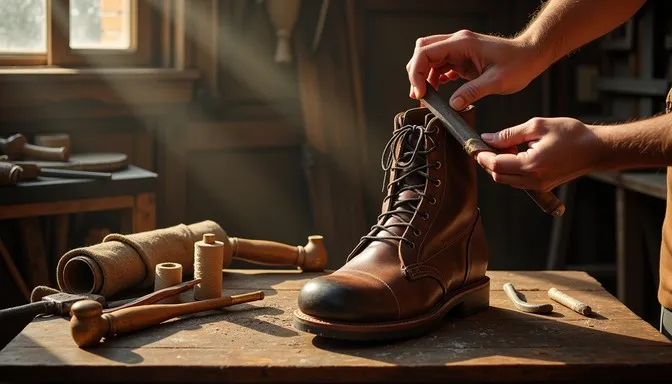
Photo: artisan leather boot maker workshop handcrafted custom footwear tools, via images.stockcake.com
If you've ever tried to find truly specialized boots — the kind built for a specific aesthetic, a particular fantasy, or a niche that the big-box brands wouldn't touch with a ten-foot pole — you know the frustration. The mainstream shoe industry has always treated the fetish and alternative fashion community as an afterthought, if it acknowledged them at all. A couple of decades ago, your options were limited: a handful of catalog companies, a few specialty shops in major cities, and a lot of compromising.
That landscape has changed dramatically. And the people changing it are working out of small studios, home workshops, and custom ateliers — often with a waiting list and a social media following that would make some established brands jealous.
The Rise of the Intentional Maker
The term "independent designer" gets thrown around a lot, but in the fetish footwear world it means something specific. These aren't people who stumbled into niche markets. They chose them — often because they were part of the community themselves and couldn't find what they wanted.
Take Delilah Vance, a 34-year-old cobbler and leather artist based in Austin, Texas, who launched her custom boot label Ironveil Studio in 2019. Her origin story is pretty representative of the space. "I was at a leather event and I had this vision of exactly the boot I wanted — extreme heel, thigh-high, reinforced toe, very specific hardware placement," she says. "I couldn't find it anywhere. Not even close. So I figured I'd just learn to make it myself."
She did. And then she started making them for other people. Ironveil now operates on a fully custom-order basis, with a six-to-eight-week turnaround and prices starting around $800. The waiting list rarely dips below three months.
"The people who come to me know exactly what they want," Vance says. "They're not browsing. They've been thinking about this boot for years, sometimes. My job is to build the thing that already exists in their head."
Social Media as the Great Equalizer
It's hard to overstate how much platforms like Instagram, TikTok, and more specialized communities on Reddit and Fetlife have changed the game for indie fetish footwear designers. Before social media, reaching a niche audience required expensive advertising in specialty publications or a physical presence at events. Now, a single well-photographed post can connect a designer in rural Ohio with a customer in Miami who's been searching for exactly that aesthetic.
Marco Ellis, who runs the Philadelphia-based custom workshop Briar & Steel, credits Instagram almost entirely for his business's growth. "I posted my first pair of custom patrol boots in 2020 — I made them for myself, honestly, just to see if I could — and within 48 hours I had 30 DMs asking if I took commissions," he says. "I wasn't even trying to start a business."
Now Briar & Steel produces between 15 and 20 pairs a month, with a client base spanning the US, Canada, and Europe. Ellis specializes in military-influenced designs with heavy hardware and what he calls "aggressive utility" — boots that look like they mean business in every sense of the phrase.
The direct-to-consumer model also removes the filtering layer that traditional retail imposes. No buyer at a department store deciding what's too niche, too edgy, or too specific. The designer and the customer connect directly, negotiate the details, and the result is something that couldn't exist in any other commercial structure.
Pushing the Aesthetic Envelope
One of the most exciting things about the indie fetish footwear scene is the sheer creative range on display. These designers aren't working from a shared template. They're pulling from wildly different influences and arriving at genuinely distinct places.
Nya Thornton, who operates out of a shared studio space in Brooklyn under the name Nocturne Sole, focuses almost exclusively on extreme architectural footwear — platforms, ballet heels, structural designs that blur the line between shoe and sculpture. Her background is in fine art, and it shows. "I'm not really thinking about wearability as the primary value," she says, with a laugh. "Obviously I want the pieces to be wearable. But I'm more interested in what the form communicates. What does this shape say about the person wearing it? What does it say to the person looking at it?"
Her pieces regularly sell for $1,200 to $2,500 and are as likely to end up in an art collection as on someone's feet at a play party. That dual existence — fetish object and art object — is something Thornton leans into deliberately.
On the more utilitarian end of the spectrum, Denver-based designer Cal Merritt of Roughshod Custom Boots focuses on durability and function within a fetish aesthetic. His clientele includes a significant number of people who want boots that are genuinely wearable for extended periods — at events, in professional domination contexts, or just as everyday footwear that happens to carry a very specific charge. "Gorgeous is great," Merritt says. "But if your feet are killing you after two hours, the fantasy kind of falls apart."
The Community Connection
What distinguishes most of these makers from mainstream designers isn't just the aesthetic — it's the relationship with their customers. Almost universally, the indie fetish footwear designers we spoke with described deep, ongoing relationships with the communities they serve. Many are community members themselves. Most attend events, maintain active presences in online spaces, and treat customer consultations as genuine creative collaborations.
"My clients teach me things constantly," says Vance of Ironveil. "Someone will come to me with a reference I've never seen, or a specific functional requirement I hadn't thought about, and it pushes my craft in a new direction. The community and the work are completely intertwined for me."
This intimacy creates a feedback loop that mainstream brands simply can't replicate. The boots that come out of these workshops are informed by lived experience, genuine desire, and a level of specificity that mass production structurally cannot accommodate.
What Comes Next
The indie fetish footwear space is still relatively small, but it's growing — and it's getting more visible. A handful of designers have crossed over into broader alternative fashion recognition, appearing in editorial spreads and collaborative projects with better-known names. Social media continues to expand the potential audience. And as more people discover that custom, community-connected options exist, the demand for mass-market compromise is likely to keep declining.
For the designers themselves, the trajectory feels less like industry disruption and more like something that was always inevitable. The community always wanted this. The tools to build it just finally caught up.
"People have always known what they wanted," Marco Ellis says, setting down a half-finished boot to gesture at the ordered chaos of his workshop. "We're just finally in a position to make it for them."