Heel Over Head: Unpacking the Deep Psychological Pull of Boots, Power, and Desire
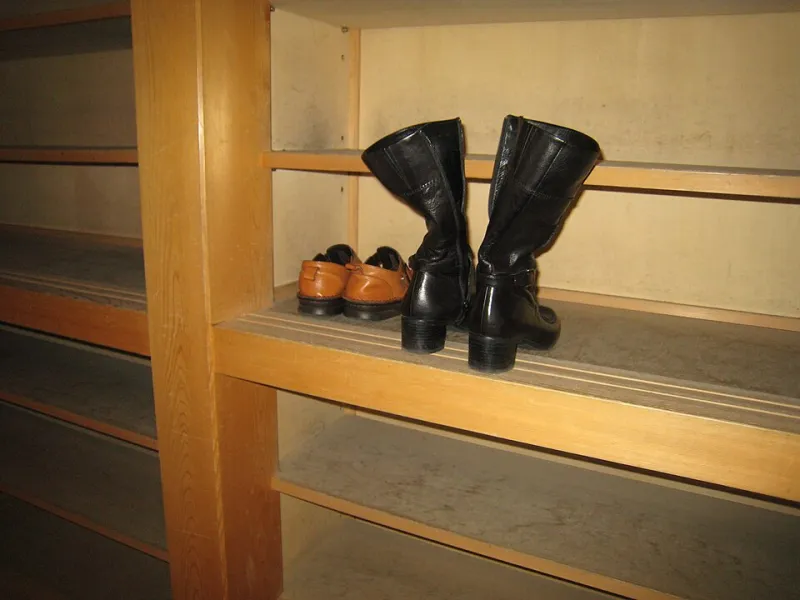
Photo: Jeremy Hall, CC BY 2.0, via Wikimedia Commons
There's a moment — you probably know it — when someone walks into a room wearing the right pair of boots and everything shifts. The sound alone does something. That deliberate, measured strike of heel against hardwood carries a message before a single word is spoken. It says: I am here. I am in charge.
For millions of people, that moment isn't just aesthetically pleasing. It's electric. And the reasons why run a lot deeper than leather and laces.
The Boot as a Symbol: A Brief (and Fascinating) History
Long before boots became a fetish fashion staple, they were instruments of authority. Roman centurions wore caligae — heavy-soled military sandals — to signal rank and readiness. Medieval knights strapped on armored sabatons as extensions of their martial identity. By the time cavalry boots showed up in the 17th and 18th centuries, the message had crystallized: boots meant power, protection, and the right to dominate space.
Fast-forward to the 20th century and you've got jackboots becoming visual shorthand for authoritarian control, motorcycle boots signaling rebellion and danger, and knee-highs becoming the unofficial uniform of dominatrixes everywhere. None of that is coincidental. Boots have been doing psychological heavy lifting for a long, long time.
"Footwear in general carries enormous symbolic weight," explains Dr. Renata Voss, a clinical psychologist based in Chicago who specializes in sexuality and identity. "But boots specifically occupy this unique space where protection, aggression, and eroticism all intersect. They encase the foot and leg — they transform the body. That transformation is inherently powerful."
Why Power Dynamics Hit Different
At the core of boot fetishism — and, honestly, at the core of a lot of human desire — is the psychology of power exchange. Whether someone is drawn to the idea of wearing the boots or being beneath them, the appeal tends to orbit around the same fundamental dynamic: control.
Psychologists have long noted that power-based fantasies are among the most common across all genders and orientations. A 2016 study published in the Journal of Sexual Medicine found that dominance and submission fantasies ranked among the top reported erotic interests in a broad US sample. Boots, with their visual and tactile associations with authority, become a kind of shorthand for that entire psychological landscape.
"There's a reason the imagery is so consistent across cultures," Dr. Voss notes. "The person in the boots is elevated — literally, with a heel — and armored. The person without them is vulnerable. That contrast is deeply evocative for a lot of people, regardless of which side of that equation they're drawn to."
For many community members, the appeal is less about submission or dominance in any strict sense and more about what boots represent emotionally. Marcus T., a 38-year-old from Atlanta who's been active in the leather and fetish community for over a decade, puts it plainly: "Boots are confidence made physical. When I wear my tall engineer boots, I feel different. I carry myself differently. It's not just aesthetic — it changes something internally."
The Confidence Factor: Wearing Power, Not Just Seeing It
This is where things get genuinely interesting from a psychological standpoint. The fetishistic appeal of boots isn't purely about observation or fantasy — for a significant portion of enthusiasts, it's about embodiment.
The concept of "enclothed cognition" — the idea that what we wear influences how we think and behave — has solid research backing. A 2012 study by Northwestern University researchers found that wearing specific clothing associated with certain traits (authority, competence, strength) actually shifted participants' psychological states. Boots, particularly those with strong historical or cultural associations with power, seem to trigger this effect with unusual intensity.
Jamie L., a 45-year-old nurse practitioner from Portland, describes pulling on her tall black riding boots before certain high-stakes days at work. "I'm not doing it for anyone else," she says. "It's almost ritualistic. Those boots remind me of who I am when I need to be at my strongest. There's something about that heel, that height, that makes me feel untouchable."
This blending of personal empowerment and erotic charge is actually pretty common in the boot community. The line between "I wear these because they make me feel powerful" and "I find powerful people in boots incredibly attractive" is often blurry — and for many people, that blurriness is exactly the point.
Military Heritage and the Eroticism of Structure
It's worth spending a moment on the military thread here, because it keeps coming up. Combat boots, riding boots, patrol boots — so much of fetish footwear traces a direct lineage back to military and paramilitary aesthetics. And that's not just about looking tough.
Military culture is, at its core, about structure, hierarchy, and the abdication of individual identity to a larger order. For people who find power dynamics erotic, that framework is enormously resonant. The boot becomes a symbol of that entire system — discipline, obedience, command.
"There's a reason military aesthetics show up so consistently in BDSM and leather communities," Dr. Voss observes. "It's not necessarily about politics or ideology. It's about the psychological architecture of hierarchy. Uniforms — and boots especially — make rank visible. They make power tangible."
Finding Your Own Meaning in the Leather
What's striking, when you actually talk to people in the boot and fetish community, is how varied and personal the meanings are. For some, boots are about dominance. For others, surrender. For others still, it's purely about the sensory experience — the smell of leather, the weight on the foot, the sound of a heel. Many people find that their relationship with boots shifts over time, layering new associations onto old ones.
What seems consistent is the intensity of the connection. Boots aren't casual for the people who love them. They carry history, identity, and desire in a way that few other garments can match.
And maybe that's the real answer to the "why boots?" question. It's not one thing. It's the convergence of a thousand things — historical symbolism, sensory richness, psychological resonance, personal narrative — all compressed into a single, beautifully constructed object that hits the floor with exactly the right sound.
Walk into any room in a great pair of boots and you'll feel it. Some of us just feel it a little more than others.