Wear the Damn Boots: Navigating the Gap Between Who You Are and What You Dare to Put On
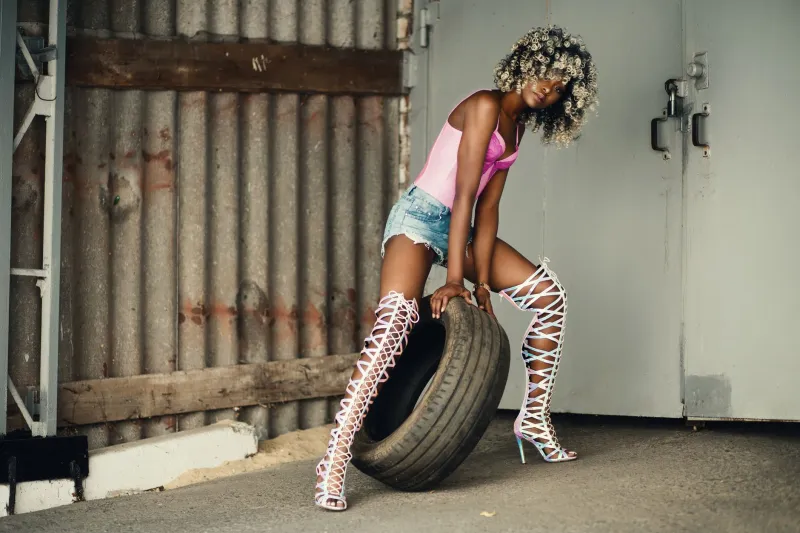
You've got a pair of thigh-highs sitting in your closet that you've worn exactly once—at home, alone, in front of a mirror. Sound familiar? The space between loving bold, fetish-inspired footwear and actually stepping out in it is wider than most people admit, and it's got everything to do with how we manage desire under the weight of other people's eyes.
Statement boots—the kind with six-inch platforms, lace-up fronts, dramatic silhouettes, or that unmistakable edge that signals something beyond ordinary fashion—carry a specific kind of social weight. They announce you before you speak. And for a lot of wearers, that announcement feels thrilling in theory and terrifying in practice.
So what's actually going on when you reach for the bold pair and pull back at the last second?
The Psychology of the Almost-Moment
Dr. Renata Voss, a licensed psychologist who works with clients exploring identity and self-expression, puts it simply: "Bold footwear functions as what we call a visibility trigger. It draws attention in a way that feels involuntary—like you've opted into being seen without quite controlling how you're seen. For people who carry any kind of social anxiety or fear of judgment, that's a genuine psychological risk."
And it's not vanity or weakness that creates that hesitation. It's actually a pretty rational response to a real social environment. The US workplace, the suburban school pickup line, the family dinner—these are spaces with unspoken dress codes that go way beyond what HR puts in writing. Showing up in head-turning boots in those contexts isn't just a fashion choice. It's a statement about who you are, and not everyone feels safe making that statement out loud.
There's also something specific about fetish-adjacent fashion that adds another layer. When a boot style carries cultural associations with kink, dominance, or sexual expression—even if the wearer's intent is purely aesthetic—they have to anticipate how others might read that. Stylists who work with clients navigating this territory describe it as "carrying the subtext of the shoe."
"My clients who love this kind of footwear are often incredibly self-aware," says Chicago-based personal stylist Marcus Delray. "They know exactly what the boots mean to them. What they're not sure about is what the boots will mean to everyone else in the room. That uncertainty is what keeps the shoes in the closet."
The Workplace Problem
Let's be honest—office culture has gotten more relaxed in recent years, but it hasn't gotten that relaxed. The rise of remote work gave a lot of people permission to experiment with their style on camera from the waist up. Below the desk? Whole different story for some.
For wearers who feel most themselves in dramatic footwear, navigating professional environments can feel like a constant negotiation. Do you tone it down to avoid judgment? Do you wear what you love and brace for comments? Do you find a middle ground that satisfies neither impulse?
Delray recommends what he calls "strategic escalation"—introducing bolder elements gradually rather than going from zero to full statement in one leap. "Start with a structured Chelsea boot in an unexpected color. Let your coworkers adjust to the idea that you have a distinct aesthetic. Then move into something with more drama. You're essentially training your environment."
It's a practical approach, but it also highlights something uncomfortable: the burden of managing other people's comfort with your self-expression. Ideally, you shouldn't have to. Practically, it can make the difference between wearing what you love and dreading every interaction.
Social Contexts and the Permission We Give Ourselves
Here's something interesting: most people who love bold, fetish-inspired boots describe feeling completely different wearing them in different contexts. The same pair that feels electric at a club or a queer fashion event can feel exposing and vulnerable at a family barbecue. Same boots, same person, wildly different internal experience.
That context-dependence isn't a contradiction—it's actually a sign of sophisticated social awareness. We all code-switch in various ways, and fashion is one of the most visible arenas where that happens. The question is whether the constant adjustment starts to feel like hiding.
"There's a difference between being thoughtful about context and being ashamed of yourself," Dr. Voss notes. "The problem comes when someone is only ever wearing the boots they love in private, or only when they're sure no one who 'matters' will see them. That's when the wardrobe starts functioning as a source of shame rather than joy."
The antidote, she suggests, isn't necessarily wearing your most extreme pair to Thanksgiving dinner. It's building what she calls "a scaffolding of safe contexts"—places, communities, and relationships where you can show up fully, which then gradually expands your tolerance for visibility elsewhere.
Finding Your People (And Your Footing)
One of the most consistent things that wearers of bold footwear describe is the transformative effect of community. Whether it's an online forum, a local fetish fashion event, a queer social space, or even just a friend group that gets it—being seen and affirmed in the thing you love changes your relationship to it.
"When I started going to events where other people were wearing the same kind of boots I loved, something shifted," says Jamie, a 34-year-old teacher from Portland who asked to use only their first name. "I stopped seeing myself as someone with a weird private thing and started seeing myself as someone with a taste. That sounds small, but it completely changed how I carried myself."
That shift in self-perception—from "weird private thing" to "distinctive taste"—is exactly what makes community so powerful for people navigating the gap between private desire and public expression.
Practical Moves for Getting Out of Your Own Way
If you're sitting with a closet full of bold boots you love but rarely wear, here are a few things worth trying:
Start with one low-stakes outing. Pick a context where you feel relatively comfortable—a casual dinner with close friends, a weekend errand run—and wear the boots. Notice what actually happens versus what you feared would happen.
Find one person who gets it. You don't need a whole community right away. One friend, one online connection, one person who responds to your boot selfie with genuine enthusiasm can do a lot to normalize your own desire.
Separate the boots from the judgment. The boots aren't the problem. Other people's potential reactions are the problem—and those reactions are about them, not you. It sounds obvious, but sitting with that distinction actually matters.
Reframe visibility. Being noticed isn't the same as being judged. Sometimes people stare because something is genuinely striking. You're allowed to let that be a neutral or even positive experience.
The closet is a powerful metaphor for a reason. What you keep hidden and what you're willing to show says a lot about where you are with yourself. The boots are just boots—until they're not. Until they're the thing you put on when you're finally ready to take up a little more space.
Wear them when you're ready. But maybe push that timeline up a little.