The Price of Obsession: What You're Actually Paying For When You Buy Luxury Fetish Footwear
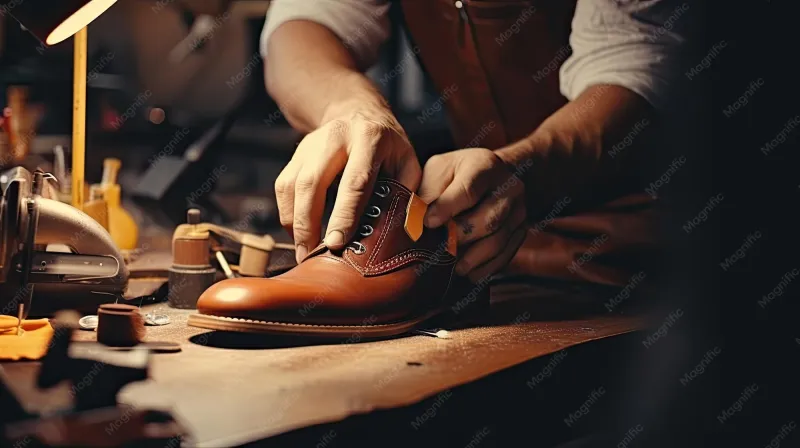
Photo: artisan cobbler hand stitching luxury leather boot workshop close up, via img.freepik.com
Let's be honest about the sticker shock. You're browsing a boutique maker's site — maybe someone out of Portland or a small atelier operating out of New York's garment district — and you see a pair of custom-laced thigh-high boots with a sculpted heel and full-grain leather construction. The price is $1,200. Maybe $1,800. Maybe more. And some part of your brain, no matter how much you want that pair, short-circuits.
It's a reasonable reaction. We live in an era of fast fashion and algorithmic pricing, where a pair of boots that looks similar can be sourced from a mass manufacturer for $90. The visual gap between the luxury piece and the budget alternative isn't always obvious in a photograph. So what exactly are you paying for when you invest in premium fetish footwear? The answer is more layered — and more interesting — than you might expect.
The Material Reality: What Goes Into the Leather
The conversation starts with hides, because that's where the cost divergence begins in earnest. Full-grain leather — the top layer of the hide, minimally processed to preserve the natural grain — is categorically different from the corrected-grain or bonded leather used in mass-market footwear. It's more expensive to source, harder to work with, and significantly more durable over time. It also develops a patina that cheaper materials simply don't.
For specialty and fetish-oriented footwear, the material conversation gets even more specific. Patent leather — that high-gloss finish that's become synonymous with a certain aesthetic — requires additional processing steps that add cost at the manufacturing level. Exotic-adjacent materials like pebbled or textured leathers, vegan alternatives with comparable performance characteristics, and hardware-heavy designs all carry their own sourcing premiums.
"The hide is maybe 30 to 40 percent of my material cost on a standard pair," explained one independent boot maker based in the Pacific Northwest who asked to be identified only by her workshop name. "But when you're working with specialty finishes or unusual textures, that percentage climbs fast. And I'm not cutting corners on hardware — every buckle, every eyelet, every D-ring is solid brass or stainless. That's not a small line item."
Ethical sourcing adds another layer of cost that consumers increasingly care about. Small-batch makers working with US-based or European tanneries — operations with traceable supply chains and documented labor standards — pay more for their materials than manufacturers sourcing from less regulated markets. That premium gets passed along, and it should.
The Labor Equation: Hours You Can't See
Mass-market footwear is engineered for speed. Patterns are optimized for cutting efficiency. Assembly is broken into discrete, repeatable steps executed by workers on production lines. A pair of boots that retails for $80 probably represents somewhere between 20 and 40 minutes of actual assembly time.
Custom and specialty construction operates in an entirely different time economy. A corset-laced boot with a fitted shaft requires precise pattern drafting — often done to individual measurements — before a single piece of leather is cut. The lasting process, where the upper is stretched and shaped over a foot-form, is done by hand. Stitching on a complex design might take several hours on its own.
"I track my hours obsessively," said a Brooklyn-based bootmaker who has built a following in the fetish and alternative fashion community over the past decade. "A standard pair, no customization, is about 14 to 18 hours of work from pattern to finished product. A custom pair with significant modifications — height adjustments, non-standard heel work, elaborate closure systems — can run 30 hours or more. If I'm paying myself a living wage in New York, that math gets real very quickly."
This is the piece of the pricing puzzle that's hardest for consumers to intuit. Labor is invisible in the finished product. You see the boot. You don't see the hours.
Small-Batch Economics: The Scale Problem
Manufacturing economics are brutally straightforward: the more units you produce, the lower your per-unit cost. A factory producing 10,000 pairs of a given style amortizes its tooling costs, material purchasing power, and operational overhead across an enormous volume. A maker producing 50 or 100 pairs a year operates with none of those advantages.
Custom lasts — the foot-shaped forms that boots are built around — are a useful example. A standard last might cost a large manufacturer a few dollars per pair when amortized across production volume. A custom last built for a specialty silhouette, ordered in small quantities from a last maker, might cost $400 to $600 for the form itself. When you're making 20 pairs in a style, that's $20 to $30 per pair in last costs alone before you've bought a single inch of leather.
The same dynamic plays out across nearly every input: thread, adhesives, insole materials, packaging. Small-batch producers pay retail or near-retail prices for most of their supplies. The savings that accrue to volume buyers simply aren't available to them.
The Market for Desire: Why Specialty Commands a Premium
Beyond pure production economics, there's a market dynamic at play that's worth naming directly. Specialty and fetish footwear serves a specific, passionate audience — one that has historically been underserved by mainstream fashion and is accustomed to paying for access to pieces that actually speak to their aesthetic. The demand is real, the supply is constrained, and the emotional valence of the purchase is high.
This isn't price gouging. It's the natural economics of a niche market with genuine craft at its center. Consumers who deeply want something specific — a particular heel geometry, a specific shaft height, hardware placed just so — are less price-sensitive than general consumers, and makers price accordingly.
What this means practically for buyers is that the premium fetish footwear market rewards research and relationship-building. Many small makers offer waitlists, pre-order structures, or tiered customization options that can make the investment more manageable. Understanding what you're paying for — and why — makes it easier to evaluate whether a given price point is justified.
Reading the Price Tag Honestly
So when you see that $1,400 pair of custom-constructed boots and feel the sticker shock, here's the reframe: you're not paying for a brand name or a margin. You're paying for 20-plus hours of skilled labor, full-grain or specialty leather sourced from a traceable supply chain, hardware that won't degrade, and construction standards that mean the boots will outlast anything you'd find at a chain retailer by years — possibly decades.
That's not a rationalization. That's just what premium actually costs when the people making the thing are paid fairly for what they know how to do. For a community that's built its aesthetic life around pieces that matter, that seems like exactly the right place to put your money.