Talking Through the Leather: How Shared Boot Desire Is Changing the Way Couples Communicate

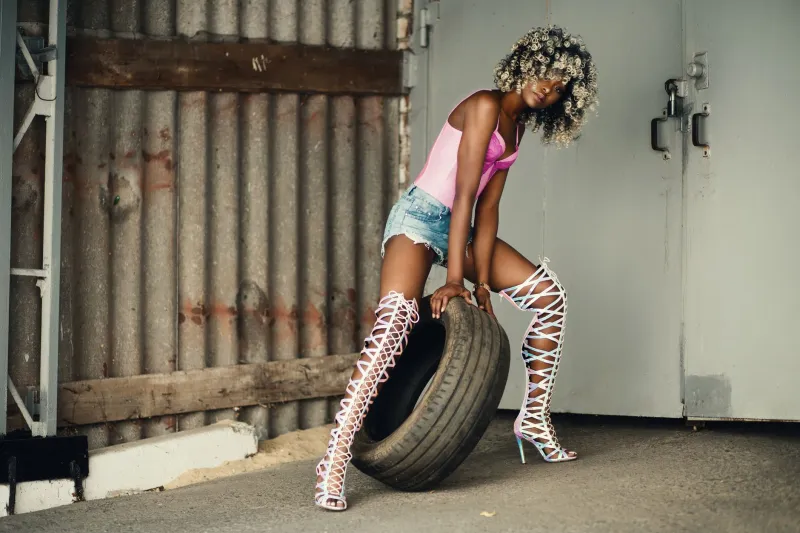
Photo: PattayaPatrol, CC BY-SA 4.0, via Wikimedia Commons
There's a moment a lot of boot enthusiasts know well. You've been carrying this thing — this deep, persistent pull toward leather and heels and the particular electricity that comes with them — and you finally say something to your partner. Maybe it comes out smooth. Maybe it stumbles out sideways at 1 a.m. Either way, something shifts. And what happens in the weeks and months after that moment often determines not just the shape of your intimate life, but the depth of your relationship altogether.
Boot culture, it turns out, has quietly been doing something pretty remarkable. It's creating couples who are genuinely better at talking to each other.
Why Fetish Disclosure Changes Everything
Sharing a kink with a partner isn't just about adding something new to the bedroom. It's an act of radical vulnerability — the kind therapists spend years helping people work up to. When you tell someone what truly moves you, what lives in the private corners of your desire, you're handing them something real.
Dr. Mara Ellison, a licensed couples therapist based in Portland who works with kink-positive clients, puts it plainly: "Fetish disclosure is one of the most honest conversations a couple can have. It requires you to articulate something deeply personal, often without a ready-made script. That kind of honesty, when it's received well, tends to become a template for how the couple communicates about everything else."
For boot-centric relationships specifically, that disclosure often opens doors that might have stayed shut otherwise. Suddenly you're talking about what you actually want, what makes you feel seen, and what crosses a line for you. That's not a small thing.
The Vocabulary That Develops
Couples who share a boot fetish frequently develop what you might call an internal shorthand — a private language built around their shared interest. It might be as simple as leaving a specific pair of boots by the door as a signal, or as nuanced as a whole negotiated system of cues and check-ins that have evolved over time.
Jamie and Reese, a couple from Austin who've been together for six years, describe it as "speaking in code, but a code we both helped write." Reese wears boots in a particular way when they want to signal interest. Jamie has a phrase that means I'm game and a different one that means not tonight, but soon. None of this was planned from the start — it grew organically out of ongoing conversations about what felt good and what didn't.
"We had to get really specific about what we liked," Jamie says. "And once you're comfortable being that specific about desire, it bleeds into everything. We're better at fighting, better at planning, better at just checking in with each other."
That's not coincidence. It's communication muscle memory, built through practice.
Boundaries as a Love Language
One of the most counterintuitive things about kink-positive relationships is that the boundaries often feel like intimacy rather than restriction. When a couple sits down — ideally outside of the heat of the moment — and talks through what's on the table, what's off it, and what needs more conversation before it's on the table, they're doing something genuinely loving.
For boot fetishists, those conversations might cover things like: Is this about aesthetics or sensation? Do you want to incorporate this into roleplay, or keep it more ambient? Are there specific types of boots that feel charged in different ways? What does care and maintenance of the boots mean to you — is that part of the ritual, or just upkeep?
These aren't small questions. And working through them together creates a kind of relational scaffolding that holds up under pressure.
Dr. Ellison notes that couples who establish clear, enthusiastic consent frameworks around kink often report higher satisfaction in their relationships overall. "When both partners feel like their preferences are being heard and respected — not just tolerated — it creates safety. And safety is what allows desire to actually flourish."
When One Partner Is New to It
Not every boot-forward relationship starts with two people who are already on the same page. Sometimes one partner comes in with a well-developed fetish and the other is encountering it for the first time. That dynamic requires extra care — and extra communication.
The risk, as many therapists point out, is that the fetish-holder can feel like they're always asking for something, and the partner can feel like they're always being asked. Over time, that imbalance can breed resentment on both sides.
The fix isn't suppression. It's structure. Couples who navigate this well tend to establish regular, low-stakes check-ins — not just about the fetish, but about how both people are feeling in the relationship broadly. They treat desire as an ongoing conversation rather than a one-time negotiation.
Marcos, a 34-year-old from Chicago, describes introducing his boot interest to his now-husband this way: "I didn't want it to be a big dramatic confession. I just started talking about it the way I'd talk about anything I was into. Showed him some boots I loved, explained what I found compelling about them. He was curious, not weirded out. And that curiosity gave us a place to start."
That low-pressure entry point made all the difference. The conversation became collaborative rather than confessional.
The Afterglow Effect
Here's something that doesn't get talked about enough: the communication benefits of a healthy kink dynamic extend well beyond the intimate moments themselves. Couples who've done the work of negotiating desire tend to carry those skills into other parts of their relationship — conflict resolution, financial decisions, parenting discussions, all of it.
When you've practiced saying this is what I need and here's where my limit is in a context that matters deeply to you, saying those things in a disagreement about household responsibilities becomes, if not easy, at least less terrifying.
Boots, in this sense, become a kind of training ground. The leather is real, the desire is real, and the conversations that happen around both of them are building something that lasts.
Starting the Conversation
If you're sitting with something you haven't said yet, here's the practical reality: there's no perfect script. But there are better and worse conditions. Pick a calm moment, not a charged one. Lead with curiosity rather than urgency. Be specific about what you're drawn to and honest about what you're hoping for.
And if your partner responds with questions rather than judgment? That's a good sign. Curiosity is the gateway to connection.
Boot culture, at its best, has always been about more than footwear. It's about knowing what you want, being brave enough to say it, and finding someone who's willing to meet you there — laces and all.