Built to Feel Good and Look Even Better: The New Era of Boots That Do Both
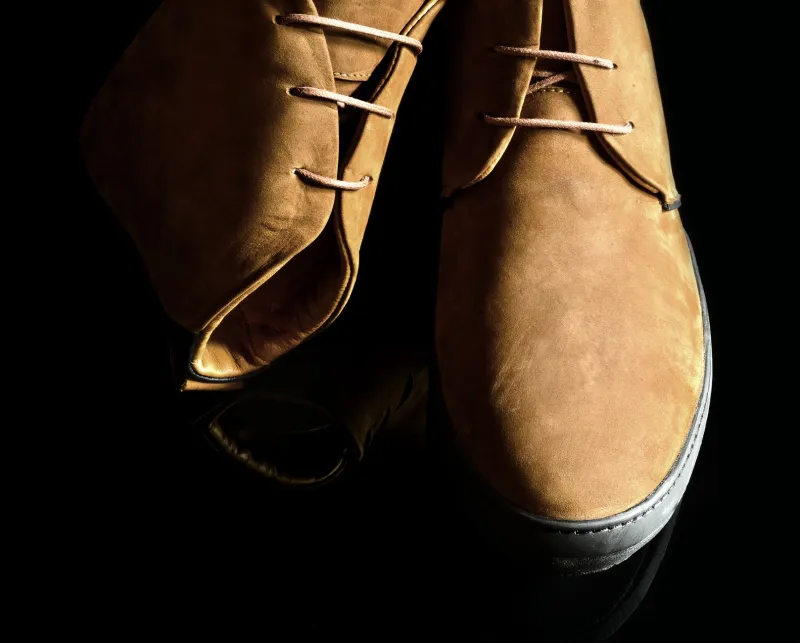
There's a story a lot of boot people know by heart. You find the pair. The one that makes your chest tighten a little when you see it on the shelf or on the screen. You buy it. You wear it. And then, somewhere around hour three, your feet start filing a formal complaint.
For decades, that trade-off was just accepted as the cost of doing business in the fetish footwear world. Want a six-inch heel with a silhouette that commands a room? Enjoy your blisters. Obsessed with stiff, structured leather that looks like it was pulled from a dominatrix's personal archive? Hope you stretched first. The idea that serious boots — the kind that hit different, that carry weight beyond just covering your feet — had to be punishing was practically gospel.
It's not anymore.
The Old Myth and Why It Stuck Around
The comfort-versus-desire divide didn't come out of nowhere. For a long time, the engineering just wasn't there. Rigid constructions, unforgiving lasts, materials that prioritized aesthetics over anything resembling biomechanics — these were the realities of how fetish-adjacent footwear got made. And honestly? Part of the appeal was wrapped up in that difficulty. There's a whole psychological thread in boot culture around the idea that the boot demands something from you. That you earn the look.
But that narrative also did something less flattering: it kept a lot of people out. Folks with chronic pain, foot conditions, jobs that require actual standing and walking — they got pushed to the sidelines of a culture they genuinely loved. The message, whether intentional or not, was that if your body couldn't handle the punishment, this wasn't your space.
Designers are finally pushing back on that, and the results are worth paying attention to.
What's Actually Changing in the Construction Room
The shift isn't happening because boot makers suddenly got sentimental. It's happening because materials science caught up with ambition. Thermoplastic rubber compounds are now being used in soles that were previously built from rigid leather stacks — you get the silhouette and the height without the zero-flex penalty. Memory foam and anatomical footbeds are being engineered into boots that, from the outside, look like they were designed exclusively for someone's most elaborate fantasy.
Some of the more interesting work is coming out of smaller American workshops and independent labels that don't have legacy production methods to defend. A bootmaker out of Portland has been experimenting with articulated heel shanks — essentially a flexible internal structure that lets the boot move with your foot rather than against it. The result looks like a traditional stacked heel. It walks like something entirely different.
On the leather side, there's growing use of full-grain hides that are tanned specifically for flexibility rather than just durability. These aren't the stiff, break-in-or-else leathers of old. They arrive with a suppleness that molds to the foot faster, without sacrificing the visual weight and presence that makes a boot feel like a boot.
What Wearers Are Actually Saying
Talk to people who've made the switch and the response is pretty consistent: they were skeptical, and then they weren't.
One collector based in Chicago who's been deep in the boot world for over a decade described trying a pair from a newer label known for ergonomic construction as "the first time I didn't have to negotiate with my own feet to wear the thing I actually wanted to wear." She still keeps her older pairs — the stiff, demanding ones that require a whole ritual to put on — but she doesn't reach for them when she needs to be present in the world for more than a few hours.
That distinction matters. The idea isn't that comfort replaces desire. It's that you get to choose your relationship with discomfort rather than having it chosen for you by a last that was never designed with your foot in mind.
The Aesthetic Doesn't Have to Take the Hit
Here's the concern that comes up every time this conversation gets going in boot communities: if you engineer the suffering out, do you engineer the edge out too? Does a boot that feels good automatically look... fine?
The short answer is no, and the longer answer is that this is kind of a lazy assumption. Visual drama in a boot comes from proportion, silhouette, material quality, hardware, and construction detail — none of which are dependent on the boot being a foot prison. A knee-high with a dramatic heel can be just as visually arresting whether or not it's going to wreck you by the end of the night.
If anything, some designers argue that comfort-forward construction opens up aesthetic possibilities rather than closing them down. When you're not fighting against the structure of the boot, you can actually inhabit it differently. The way you walk changes. The way you carry yourself shifts. And that, in the boot world, is kind of the whole point.
The Cultural Shift Underneath the Design Shift
What's interesting about this moment isn't just the technical innovation — it's what it says about where boot culture is headed. There's a broader conversation happening across the fetish and fashion-adjacent communities about who gets to participate and on what terms. The old gatekeeping energy, the idea that suffering proves devotion, is losing ground to something more expansive.
People want boots that fit their actual lives. They want to wear the thing that makes them feel like themselves — powerful, desirable, exactly who they are — without it being a special occasion thing bracketed by recovery time. That's not a compromise. That's an upgrade.
And the designers paying attention to that shift are building some of the most compelling footwear coming out of the American market right now. Not because they're softening the aesthetic. Because they're taking the whole experience seriously.
Both, Actually
The comfort-versus-desire framing was always a false choice, even if the industry treated it like a fact of life. The boots that are turning heads right now — the ones getting passed around in DMs and talked about in collector forums — aren't the ones that look good despite being wearable. They're the ones that look good and are wearable, as if those two things were never in conflict to begin with.
Which, it turns out, they weren't. Someone just finally bothered to prove it.